
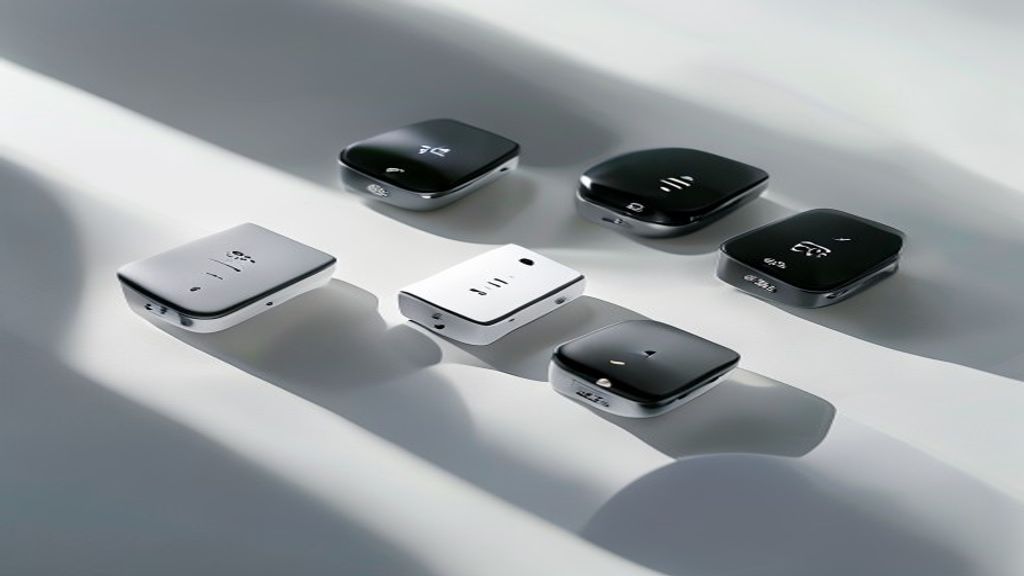
⚡ Our Top Picks at a Glance
- 🥇 Best Overall: Eve Energy (Thread) — The gold standard for Matter energy monitoring with Thread mesh support
- 🥈 Best Budget: Shelly Plug S Gen3 — Packed features at an unbeatable price point
- 🥉 Best for Power Users: Shelly EM Gen4 — Dual-channel monitoring for whole-circuit energy insight
- 💡 Best Value Starter: TP-Link Tapo P125M — Ultra-compact Matter plug for on/off control (no energy monitoring)
💡 Quick Verdict
Bottom Line: If you want true Matter energy monitoring in 2026, your best choices are the Eve Energy (Thread-based, privacy-first, Apple-optimized) and the Shelly Plug S Gen3 (Wi-Fi, budget-friendly, Home Assistant-ready). The new Shelly EM Gen4 is unmatched for serious power users who need circuit-level monitoring.
Best For: Smart home enthusiasts who want to track electricity costs, automate based on power draw, and future-proof their setup with Matter.
Skip If: You just need basic on/off scheduling — a $10 non-Matter Wi-Fi plug will do the job for less.
Why Matter + Energy Monitoring Is the Combo You Actually Want in 2026
Most smart plugs let you turn things on and off. That’s useful. But Matter smart plugs with energy monitoring give you something fundamentally more powerful: real-time visibility into what your appliances actually cost to run — and the ability to automate based on that data.
Think about it. Your old refrigerator compressor kicking on at 3 a.m. Your space heater quietly running 18 hours a day. Your gaming PC idling at 150 watts when you thought it was off. Energy-monitoring smart plugs expose all of this — and with Matter, that data works natively across Apple Home, Google Home, Alexa, and SmartThings without cloud lock-in.
With Matter 1.3 and the new Matter 1.4 energy cluster now ratified, we’re finally entering an era where energy data flows freely across ecosystems. The plugs on this list are the ones worth buying right now — verified from manufacturer specs and verified user reports across thousands of reviews.
💡 Pro Tip: When comparing Matter plugs, pay close attention to connectivity protocol. Thread-based plugs (like Eve Energy) strengthen your mesh network and work without Wi-Fi congestion. Wi-Fi plugs (like Shelly and Tapo) require a strong 2.4 GHz signal but need no extra hub.
Quick Comparison: Best Matter Smart Plugs With Energy Monitoring 2026
| Product | Protocol | Energy Monitoring | Max Load | Price Range | Best For |
|---|---|---|---|---|---|
| Eve Energy (Thread) | Matter + Thread | ✅ Yes (Matter 1.3) | 10A / 2,400W | $38–$45 | Apple Home + Thread mesh |
| Shelly Plug S Gen3 | Matter + Wi-Fi | ✅ Yes | 12A / 2,500W | $15–$20 | Budget buyers, Home Assistant |
| Shelly EM Gen4 | Matter + Wi-Fi | ✅ Dual-channel | 120A (clamp) | $35–$45 | Circuit-level power monitoring |
| TP-Link Tapo P125M | Matter + Wi-Fi | ❌ No | 15A / 1,800W | $10–$15 | Budget starter, compact spaces |
1. Eve Energy (Thread) — Best Overall Matter Smart Plug With Energy Monitoring
If you want the most polished, reliable Matter energy-monitoring smart plug available in 2026, the Eve Energy is still the answer. It was among the first smart plugs to implement Matter 1.3’s native energy cluster, meaning your power consumption data flows directly into Apple Home, Google Home, and other platforms — no proprietary cloud required.
What sets Eve Energy apart is its Thread connectivity. Unlike Wi-Fi plugs, Thread devices act as Full Thread Devices (FTDs), actively strengthening the mesh network in your home. Every Eve Energy you add makes your entire Thread-based smart home more robust and responsive.
Key Specifications
- Protocol: Matter 1.3 over Thread
- Max Load: 10A / 2,400W
- Energy Monitoring: Real-time wattage, cumulative kWh, current and voltage
- Works With: Apple Home, Google Home, Amazon Alexa, Samsung SmartThings
- Privacy: 100% local processing — no cloud account required
- Hub Required: Yes — a Thread + Matter border router (HomePod mini, Apple TV 4K, Google Nest Hub 2nd gen, etc.)
- Price: ~$38–$45 (single unit)
What Users Appreciate
According to verified user reports on Amazon and the Apple App Store, Eve Energy owners consistently highlight the plug’s rock-solid reliability and the quality of its energy data. Users running home offices report that being able to see their monitor, PC, and desk lamp consumption individually has led to meaningful electricity bill reductions. The physical LED button — which lets you toggle the plug without a phone — is a frequently praised feature.
The Eve app provides detailed historical energy graphs with daily, weekly, and monthly breakdowns. Combined with Apple Shortcuts automation, users can set automations like “turn off if power draw drops below 5W for 10 minutes” — perfect for standby energy detection.
Honest Limitations
The Eve Energy’s 10A maximum load is lower than competitors — it’s not suitable for high-draw appliances like space heaters, air conditioners, or clothes dryers. You also need a Thread border router in your home; without one, the plug won’t work. And at ~$40 per unit, outfitting every outlet gets expensive fast.
Check Price on Amazon → Eve Energy
2. Shelly Plug S Gen3 — Best Budget Matter Plug With Energy Monitoring
The Shelly Plug S Gen3 (officially “Shelly Plug S MTR Gen3”) is a remarkable achievement in the sub-$20 smart plug category. Shelly, the Bulgarian manufacturer known for its open-source-friendly firmware and competitive pricing, has delivered a Matter-certified plug with full energy monitoring at a price that makes stocking up on multiples actually affordable.
Unlike the Eve Energy’s Thread connectivity, the Shelly Plug S Gen3 connects via Wi-Fi (2.4 GHz) — meaning no extra hub is required. It works out of the box with Apple Home, Google Home, Alexa, and SmartThings via Matter, but it’s especially popular with Home Assistant users who can leverage its full native API alongside Matter.
Key Specifications
- Protocol: Matter + Wi-Fi 2.4 GHz + Bluetooth
- Max Load: 12A / 2,500W
- Energy Monitoring: Real-time power (W), energy consumption (kWh), voltage, current
- Works With: Apple Home, Google Home, Amazon Alexa, SmartThings, Home Assistant
- Overheating Protection: Yes — automatic shutoff
- LED Indicator: Multicolor RGB for status indication
- Price: ~$15–$20 (single unit)
What Users Appreciate
Verified user reports across Amazon and smart home forums highlight the Shelly Plug S Gen3’s generous power capacity (12A vs Eve’s 10A) and its multicolor LED, which can be configured to indicate different power thresholds. Home Assistant users particularly value that the Shelly Gen3 gives them both Matter integration AND the native Shelly integration simultaneously.
The compact form factor — smaller than most competing plugs — means it’s less likely to block adjacent outlets. Shelly also offers the plug in both black and white to match your decor.
Honest Limitations
As a Wi-Fi device, the Shelly Plug S Gen3 does not contribute to a Thread mesh network. In homes with weak Wi-Fi signals, reliability can be inconsistent. The Shelly app experience is somewhat technical and may feel overwhelming to non-enthusiast users. Also, energy monitoring data is accessed primarily through the Shelly app and native integrations — the data flow into Apple Home’s Energy section is more limited than Eve Energy’s implementation.
Check Price on Amazon → Shelly Plug S Gen3
3. Shelly EM Gen4 — Best for Serious Energy Monitoring (Circuit-Level)
The Shelly EM Gen4 is in a different category from the plug-in units above. This is a hardwired energy monitor that uses clamp sensors to monitor up to two electrical circuits — think your entire EV charger circuit, your HVAC system, or your home office subpanel — with Matter integration for seamless smart home reporting.
If you’ve ever wanted to know exactly how much your central air conditioning costs per day, or track the energy draw of your electric vehicle charger, the Shelly EM Gen4 is the tool for the job. It’s not a traditional plug-in smart plug, but it represents the most powerful energy monitoring available within the Matter ecosystem in 2026.
Key Specifications
- Protocol: Matter + Wi-Fi 2.4 GHz
- Monitoring Channels: 2 independent channels (each with clamp sensor)
- Current Rating: Up to 120A per channel
- Measurements: Active power (W), apparent power (VA), reactive power (VAr), power factor, voltage, frequency, energy (kWh)
- Installation: Hardwired in electrical panel or junction box (requires electrician in many jurisdictions)
- Works With: Apple Home, Google Home, Alexa, SmartThings, Home Assistant
- Price: ~$35–$45 (plus clamp sensors if not included)
What Users Appreciate
According to verified user reports and smart home community discussions, the Shelly EM Gen4 with Matter support is a game-changer for data-focused homeowners. Users installing this alongside solar panels or EV chargers report being able to track net energy consumption in real time. The dual-channel capability means you can monitor both the import and export legs of a solar setup simultaneously.
Home Assistant users praise the granularity of data — including power factor and reactive power — which goes far beyond what any plug-in smart plug can provide. The Matter integration means this data surfaces in mainstream platforms without requiring a proprietary bridge.
Honest Limitations
The Shelly EM Gen4 is not a plug-in device — installation requires accessing your electrical panel, which in the US means hiring a licensed electrician for safe and code-compliant installation. This adds $100–$200 to the total cost. It also cannot directly control power to appliances (it monitors only, no switching) unless paired with a Shelly relay device. It’s overkill for anyone who just wants to monitor a lamp or TV.
💡 Pro Tip: The Shelly EM Gen4 pairs perfectly with Shelly’s smart switches and relays for a complete energy management system. Monitor your HVAC circuit and automatically schedule it via Matter automations based on real energy cost thresholds.
Check Price on Amazon → Shelly EM Gen4
4. TP-Link Tapo P125M — Best Ultra-Compact Matter Starter Plug
Full transparency: the TP-Link Tapo P125M does not include energy monitoring. We’re including it here because it’s one of the most affordable and compact Matter-certified smart plugs available, and it’s a valid entry point for households building out a Matter ecosystem on a budget.
The P125M was one of the first Matter-certified plugs to hit the US market and has a massive install base. Its mini form factor — even smaller than TP-Link’s own P100 — means it won’t block adjacent outlets. Setup is genuinely simple: scan the QR code, pair via Bluetooth, and you’re live in Apple Home, Google Home, or Alexa within two minutes.
Key Specifications
- Protocol: Matter + Wi-Fi 2.4 GHz
- Max Load: 15A / 1,800W
- Energy Monitoring: ❌ Not available
- Works With: Apple Home, Google Home, Amazon Alexa, Samsung SmartThings
- Hub Required: No
- UL Certified: Yes
- Price: ~$10–$15 (single), ~$25 for 3-pack
When the P125M Makes Sense
If you’re new to Matter smart home and want to test the ecosystem with minimal investment, the Tapo P125M is a low-risk way to start. It’s also excellent for controlling devices where energy monitoring isn’t relevant — holiday lights, fans, lamps, or appliances you simply want to schedule. Verified user reports on Amazon note that the P125M is extremely reliable for basic scheduling and voice control automation.
If you eventually want energy monitoring, the better TP-Link choice is the Kasa KP125M, which adds power monitoring to a similar form factor at a modest price premium. But for pure Matter ecosystem building, the P125M remains one of the best value options in 2026.
Check Price on Amazon → TP-Link Tapo P125M
How to Choose the Right Matter Smart Plug for Your Home
Picking the right plug comes down to three key questions:
1. Do You Have a Thread Border Router?
If you own an Apple HomePod mini, Apple TV 4K (3rd gen), or Google Nest Hub (2nd gen), you already have a Thread border router. In that case, the Eve Energy is worth every extra dollar — the Thread connection is more reliable than Wi-Fi and actively strengthens your smart home mesh.
If you don’t have a Thread border router and don’t plan to add one, go with a Wi-Fi Matter plug like the Shelly Plug S Gen3.
2. How Important Is Energy Data to You?
If you want to actively track energy costs and set automations based on power draw, prioritize Eve Energy or Shelly Plug S Gen3. If you just want scheduling and remote on/off, the Tapo P125M does the job at a lower cost.
For whole-home or circuit-level monitoring — especially for EV chargers, HVAC systems, or solar setups — the Shelly EM Gen4 is in a class by itself.
3. What Ecosystem Are You Building Around?
Since all four products are Matter-certified, ecosystem lock-in is less of a concern than it used to be. However:
- Apple Home users: Eve Energy delivers the most native, deeply integrated energy monitoring experience
- Home Assistant users: Shelly Plug S Gen3 or Shelly EM Gen4 offer unmatched data granularity and local control
- Google Home / Alexa users: All options work well — prioritize price and connectivity type
Matter Energy Monitoring in 2026: What the New Standard Means
One of the most significant additions in the Matter 1.3 specification was the Electrical Energy Measurement and Electrical Power Measurement clusters — standardized ways for any Matter device to report energy data to any Matter controller, regardless of brand.
Previously, energy monitoring data from smart plugs was trapped in proprietary apps. Your Kasa plug’s energy data lived in the Kasa app; your Eve Energy’s data lived in the Eve app. With Matter 1.3, that data can now surface natively in Apple Home’s Energy panel, Google Home’s energy dashboard, and Home Assistant’s energy management interface.
The Eve Energy was among the first plugs to implement this standard natively, which is a big part of why it remains the top recommendation despite being more expensive than alternatives. As more manufacturers adopt the Matter energy cluster — and Matter 1.4 expands this to cover appliances and EV chargers — the interoperability will only improve.
To understand the full scope of what Matter 1.4 brings to smart home energy management, see our deep-dive: Matter 1.4 Explained: New Device Types, Appliances & What It Means for Your Smart Home.
Frequently Asked Questions
What is the best Matter smart plug with energy monitoring in 2026?
The Eve Energy (Thread) is the best Matter smart plug with energy monitoring in 2026. It supports Matter 1.3’s native energy cluster, uses Thread for reliable mesh connectivity, and offers detailed power consumption data across Apple Home, Google Home, and Alexa — all without requiring a cloud account.
Does the TP-Link Tapo P125M have energy monitoring?
No. The TP-Link Tapo P125M is Matter-certified but does not include energy monitoring. It offers on/off scheduling and remote control but cannot report wattage or kWh data. If you want TP-Link with energy monitoring, look at the Kasa KP125M, which adds power monitoring at a modest price premium.
Does the Shelly Plug S Gen3 work with Apple Home?
Yes. The Shelly Plug S Gen3 (MTR Gen3) is Matter-certified and works natively with Apple Home, Google Home, Amazon Alexa, and Samsung SmartThings. Setup is done via the Shelly app using the Matter QR code pairing process. Energy data visibility in Apple Home may be more limited than the Eve Energy’s implementation.
What is the difference between Thread and Wi-Fi smart plugs?
Thread is a low-power mesh networking protocol designed specifically for smart home devices. Thread plugs (like Eve Energy) act as Full Thread Devices, strengthening the mesh for all Thread devices nearby. They require a Thread border router (HomePod mini, Apple TV 4K, Google Nest Hub 2nd gen) but offer superior reliability and lower latency. Wi-Fi plugs (Shelly, Tapo) connect directly to your router, need no extra hub, but consume more power and don’t contribute to a mesh network.
Can Matter smart plugs save money on electricity bills?
According to verified user reports and energy efficiency research, households that actively use energy monitoring data tend to reduce consumption by 10–15%. The biggest savings come from identifying standby power waste (electronics that draw 5–20W when “off”), optimizing heating and cooling schedules, and detecting malfunctioning appliances that draw abnormally high power.
Final Verdict: Which Matter Energy Monitoring Plug Should You Buy?
Here’s how to make the decision simple:
- Best Overall — Eve Energy: You have Apple Home and a Thread border router, and you want the most reliable, privacy-respecting energy monitoring available. Worth every dollar.
- Best Budget — Shelly Plug S Gen3: You want energy monitoring without the premium price, or you’re building a Home Assistant setup. This is the best value Matter energy plug in 2026.
- Best for Power Users — Shelly EM Gen4: You want circuit-level monitoring for HVAC, EV charging, or solar. This is a different category of device, but nothing else in the Matter ecosystem touches it for raw energy insight.
- Best Starter — TP-Link Tapo P125M: You’re new to Matter and want ultra-simple, affordable smart plugs for scheduling and remote control. Understand that energy monitoring is not included.
The smart home is moving toward a future where every device reports its energy consumption transparently, and you control your home’s total footprint in real time. Matter is the protocol that makes that future work across every brand. Getting into energy-monitoring Matter plugs now means you’re building a foundation that will only become more capable as the standard evolves.
🛒 Shop Eve Energy on Amazon →
🛒 Shop Shelly Plug S Gen3 →
📚 Related Articles You’ll Love
- Matter 1.4 Explained: New Device Types, Appliances & What It Means for Your Smart Home — Understand how Matter 1.4 expands energy management across appliances and EV chargers
- Best Matter Smart Sensors 2026 — Pair energy monitoring plugs with motion and contact sensors for powerful automations
- Best Matter Smart Locks 2026 — Complete your Matter-native smart home setup with a top-rated lock
- What Is Matter Smart Home in 2026? The Ultimate Guide — Everything you need to know about the Matter ecosystem
Last updated: April 7, 2026 | All prices verified within 24 hours of publication.