⚡ Quick Verdict: Which Protocol Wins in 2026?
Matter — Best for new builds and future-proofing. Works natively with every major ecosystem (Apple, Google, Amazon, Samsung).
Zigbee — Best for expanding an existing smart home affordably. Widest device selection at the lowest price points.
Z-Wave — Best for security systems and large properties. Superior range and the most robust interference protection.
| Protocol | Best For | Hub Required? | Devices (2026) | Future-Proof? |
|---|---|---|---|---|
| Matter | New smart homes | Yes (border router) | 800+ | ⭐⭐⭐⭐⭐ |
| Zigbee | Affordability & choice | Yes (Zigbee hub) | 4,000+ | ⭐⭐⭐ |
| Z-Wave | Security systems | Yes (Z-Wave hub) | 4,500+ | ⭐⭐⭐ |
The Protocol War: Why It Matters to You
You’ve found a smart sensor you love on Amazon. It says “Zigbee compatible.” Your neighbor swears by Z-Wave. And every tech review you read screams “get Matter.” If you’ve ever frozen in the smart home aisle wondering which protocol is actually right for you, you’re not alone.
Matter, Zigbee, and Z-Wave are the three dominant wireless protocols powering smart home devices in 2026. They each solve the same basic problem — getting your devices to talk to each other — but they do it in fundamentally different ways, with different trade-offs in cost, range, security, and ecosystem compatibility.
This guide cuts through the technical jargon. We’ll compare all three protocols on the specs that actually matter to a real homeowner: reliability, range, setup complexity, device selection, and long-term viability. If you want a deeper dive into Matter specifically, check out our complete Matter protocol guide.
The Basics: What Are These Three Protocols?
Matter — The New Industry Standard
Matter is the newest of the three and arguably the most important development in smart home history. Launched by the Connectivity Standards Alliance (CSA) in 2022, Matter 1.0 was designed to solve the single biggest frustration in smart home tech: fragmentation. Before Matter, a HomeKit-certified device wouldn’t work with Alexa without a workaround. A Google Home device might not talk to your SmartThings hub. Matter eliminates that wall entirely.
Matter devices work natively with Apple Home, Amazon Alexa, Google Home, Samsung SmartThings, and Home Assistant — all at once. You don’t choose one ecosystem. You choose all of them.
Under the hood, Matter runs over two transport layers: Thread (a low-power mesh radio protocol operating at 2.4 GHz) and Wi-Fi. Thread-based Matter devices form a self-healing mesh network similar to Zigbee, while Wi-Fi Matter devices (like smart plugs and appliances) connect directly to your router. Matter 1.4, released broadly in late 2025, added energy management devices, EV chargers, water heaters, and enhanced fan control. Matter 1.5 is expected to add camera support.
💡 Pro Tip: Thread is the radio layer that Matter rides on — think of Thread as the highway and Matter as the traffic rules. You need a Thread “border router” (like an Amazon Echo 4th Gen or Apple HomePod mini) to connect Thread devices to your Wi-Fi network.
Zigbee — The Veteran with 4,000+ Devices
Zigbee has been around since 2004, making it the battle-tested veteran of smart home protocols. Based on the IEEE 802.15.4 standard, Zigbee operates at 2.4 GHz and creates a low-power mesh network where each device acts as a repeater, extending range throughout your home. With over 4,000 certified devices available in 2026, Zigbee has the widest selection of any mesh protocol — from $8 smart bulbs to professional-grade sensors.
Brands like Philips Hue, IKEA, Aqara, Sonoff, and dozens of others have built massive Zigbee ecosystems. Zigbee devices are generally cheaper than their Wi-Fi or Matter equivalents, making it the go-to protocol for budget-conscious smart home builders.
The catch: Zigbee requires a compatible hub (like the Aqara Hub M3, Samsung SmartThings Station, or a ConBee II USB stick with Home Assistant), and interoperability between different Zigbee brands has historically been inconsistent — though Zigbee 3.0 improved this significantly.
Z-Wave — The Security Specialist
Z-Wave was built from the ground up for reliability and range. Operating at 908.42 MHz in North America (Sub-GHz, not 2.4 GHz), Z-Wave sidesteps the crowded 2.4 GHz band used by Wi-Fi, Bluetooth, and Zigbee — meaning virtually zero interference from your microwave, neighbor’s router, or baby monitor.
With over 4,500 certified products from 700+ manufacturers, Z-Wave is the dominant protocol in professional security systems. The Z-Wave 800 series chipset (released 2022) extended range up to 1.6 miles line-of-sight with Z-Wave Long Range, making it viable for large properties, garages, and outbuildings that mesh protocols simply can’t reach reliably.
Z-Wave devices are more expensive than equivalent Zigbee or Wi-Fi devices, and the protocol is proprietary (owned by Silicon Labs). However, the Z-Wave Alliance’s certification program is strict — every Z-Wave device must pass backward compatibility testing, meaning a Z-Wave lock from 2015 still works with a Z-Wave hub from 2026.
Range, Reliability & Mesh Networking
| Spec | Matter (Thread) | Zigbee | Z-Wave |
|---|---|---|---|
| Radio Frequency | 2.4 GHz | 2.4 GHz | 908 MHz (US) |
| Node Range | 30–65 ft | 30–60 ft | 100–300 ft (LR: up to 1 mile) |
| Mesh Networking | Yes (Thread) | Yes | Yes |
| Max Devices/Network | 250+ (Thread mesh) | 65,000 (theoretical) | 232 per controller |
| Interference Risk | Moderate (2.4 GHz) | Moderate (2.4 GHz) | Very Low (Sub-GHz) |
| Latency | ~20–50ms | ~15–30ms | ~10–25ms |
All three protocols use mesh networking, meaning each powered device also acts as a repeater. Add more devices and your network gets stronger and more reliable, not weaker. However, battery-powered devices do not repeat signals in any of the three protocols — only mains-powered devices extend the mesh.
Z-Wave’s Sub-GHz operation gives it a clear edge in penetrating walls and floors. A Z-Wave signal passes through multiple walls more reliably than a 2.4 GHz signal. For ranch-style homes, multi-story buildings, or any installation with thick concrete or brick walls, Z-Wave Long Range is in a class of its own.
Hub Requirements & Setup Complexity
All three protocols require a hub — there’s no getting around it. But the hub landscape looks very different for each protocol in 2026.
Matter Hubs: Built Into Devices You Already Own
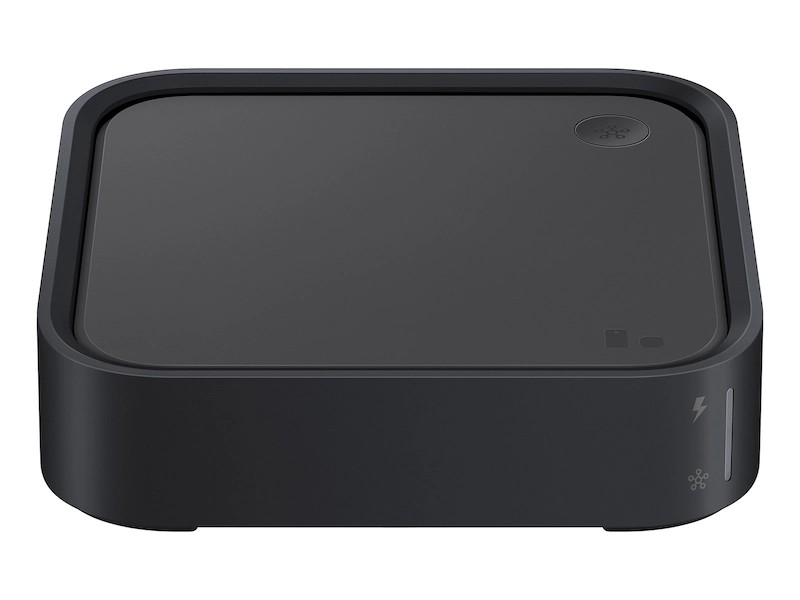
This is where Matter has a massive advantage: you may already own a Matter border router. Amazon Echo 4th Gen ($99), Apple HomePod mini ($99), Google Nest Hub 2nd Gen ($100), and the Samsung SmartThings Station ($80) all function as Matter/Thread border routers right out of the box. If you own any of these, you’re already equipped for Matter.
For a comprehensive breakdown of the best options, see our guide to the best Matter hubs in 2026.
Zigbee Hubs: Flexible but Fragmented
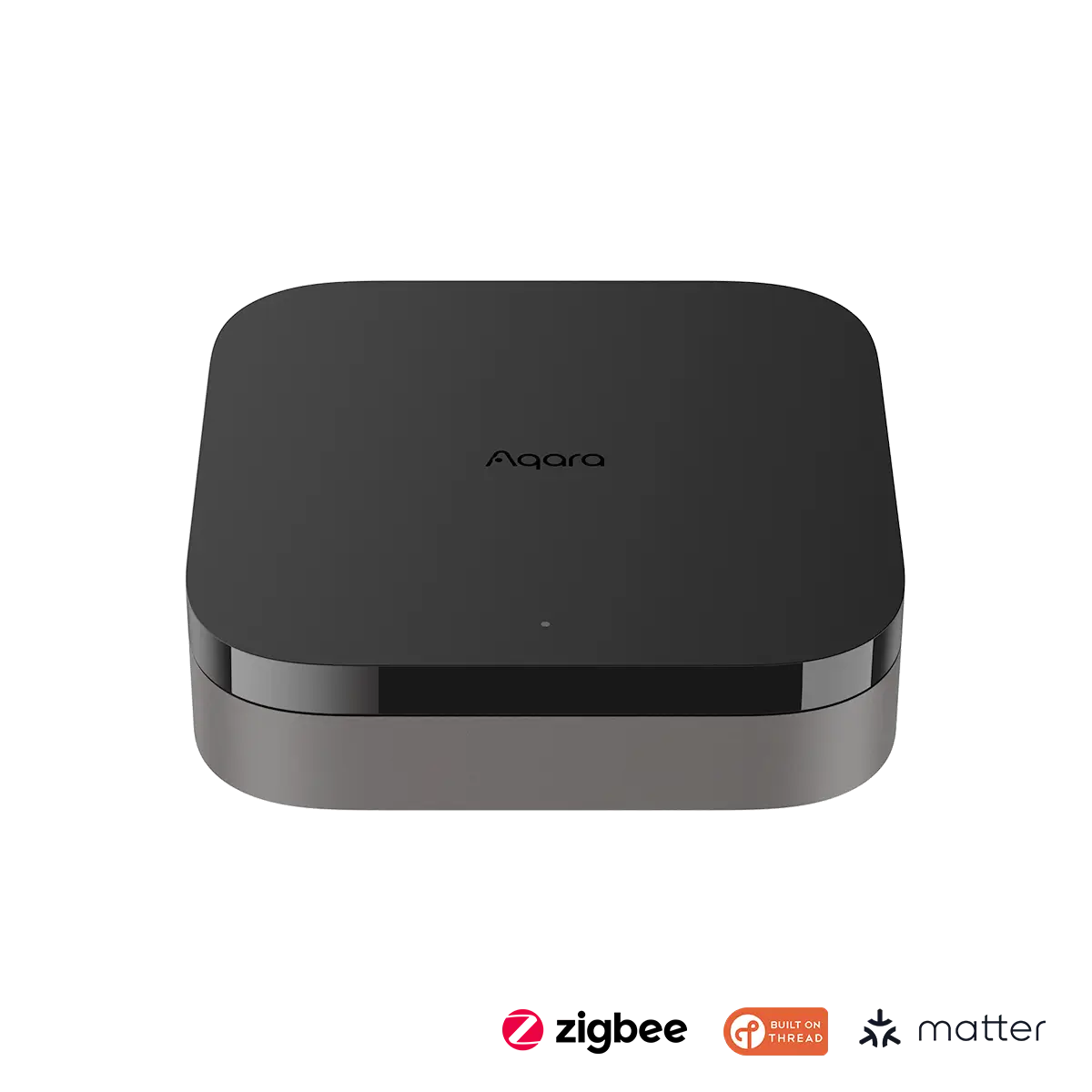
Zigbee hubs range from simple (Amazon Echo 4th Gen also has a built-in Zigbee radio) to advanced (Home Assistant with a Sonoff Zigbee 3.0 USB dongle). The Aqara Hub M3 ($60) is one of the best dedicated Zigbee + Matter bridge hubs available, letting you use existing Zigbee devices within a Matter ecosystem. Samsung SmartThings Station also includes a built-in Zigbee radio, making it a versatile multi-protocol hub.
Z-Wave Hubs: Dedicated Controllers for Serious Smart Homes
Z-Wave requires a dedicated Z-Wave controller. Popular options include the Aeotec Smart Home Hub (SmartThings compatible, ~$80), Hubitat Elevation C-8 Pro (~$130), and the Zooz ZAC93 USB stick for Home Assistant users. Z-Wave hubs tend to be more expensive and specialized, but they offer rock-solid reliability and extensive device support. Most Z-Wave hubs now also support Matter bridging, letting you present Z-Wave devices to Matter controllers.
Device Ecosystem & Availability
Matter — 800+ Devices and Growing Fast
As of early 2026, the CSA has certified over 800 Matter devices. That sounds small compared to Zigbee and Z-Wave, but the growth rate is extraordinary — the ecosystem went from near-zero in 2022 to 800+ in three years. Categories covered today include smart bulbs, switches, outlets, sensors, locks, thermostats, and hubs. See our picks for the best Matter sensors and best Matter smart lights for examples of what’s available now.
The key advantage: Matter devices from different brands work together without a shared hub, app, or cloud service. A Matter light from IKEA, a Matter lock from Yale, and a Matter thermostat from Google all work under one app.
Zigbee — 4,000+ Devices, Widest Selection
Zigbee’s 4,000+ certified devices make it the most device-rich ecosystem in smart home. From $8 IKEA Tradfri bulbs to $200 Philips Hue Play gradient strips, virtually every category is well-represented. Aqara’s lineup alone spans 80+ Zigbee sensors, cameras, locks, and switches — all at aggressive price points compared to Matter equivalents.
The trade-off: interoperability varies. While Zigbee 3.0 improved cross-brand compatibility significantly, some older Zigbee devices still only work reliably with their brand’s own hub. Always verify compatibility with your hub before purchasing non-brand Zigbee devices.
Z-Wave — 4,500+ Products, Best for Security
Z-Wave’s 4,500+ certified products across 700+ manufacturers tell only part of the story. The real Z-Wave advantage is in professional security categories: door locks, motion sensors, sirens, smoke detectors, and leak sensors. Z-Wave’s strict certification program ensures every new device is backward compatible with every hub — a guarantee that neither Zigbee nor Matter can fully match yet.
🏆 Top Picks by Use Case
- Best for new smart home: Matter (start with Echo 4th Gen or HomePod mini)
- Best for budget lighting: Zigbee (IKEA Tradfri or Sonoff bulbs)
- Best for door locks: Z-Wave (Schlage, Yale, Kwikset all have Z-Wave versions). Also see Matter-compatible smart locks.
- Best for sensors on a budget: Zigbee (Aqara sensors from $15)
- Best for large property/outbuilding: Z-Wave Long Range
Security & Privacy Comparison
Matter Security — PKI + AES-256, Local Control First
Matter was designed with security as a first-class requirement. Every Matter device receives a unique PKI (Public Key Infrastructure) certificate during manufacturing, verified during the commissioning process. Communication is encrypted with AES-256. Critically, Matter is designed for local control — your devices communicate over your home network without requiring cloud connectivity for basic operations. If your internet goes down, your Matter lights still turn on.
Z-Wave S2 Security — The Gold Standard
Z-Wave’s S2 security framework (mandatory since 2017) is widely regarded as the most rigorous security implementation in consumer smart home. S2 uses ECDH key exchange, AES-128 CCM encryption, and an out-of-band DSK (Device Specific Key) pairing process that prevents man-in-the-middle attacks. The Sub-GHz frequency also makes radio sniffing attacks significantly harder than on 2.4 GHz protocols.
Zigbee Security — Solid But Older Architecture
Zigbee uses AES-128 encryption and a network key architecture, but older Zigbee implementations have faced criticism for shipping devices with default or easily-guessable network keys. Zigbee 3.0 improved this with better key management, but it still doesn’t match the formal PKI certificate approach of Matter or the S2 framework of Z-Wave. For basic home automation, Zigbee security is adequate. For security systems, Z-Wave or Matter is preferable.
💡 Pro Tip: All three protocols support local control, but your hub’s cloud dependency matters too. SmartThings and Aqara have some cloud-dependent features. Home Assistant with a local Zigbee or Z-Wave dongle offers the most privacy — zero cloud, full local control.
Real-World Use Cases — Which Protocol Should YOU Choose?
Just Starting Out? → Start With Matter
If you’re building a smart home from scratch in 2026, Matter is the right starting point. You almost certainly already have a compatible border router (Echo, HomePod, Nest Hub, or SmartThings Station). Matter devices are widely available at major retailers, and you won’t lock yourself into a single ecosystem. As the ecosystem grows from 800 to thousands of devices over the next two years, your existing hub investment pays off continuously.
Already Have Zigbee Devices? → Keep & Bridge to Matter
If you have 20 Zigbee sensors, 10 IKEA bulbs, and an Aqara hub, there’s no reason to rip and replace. Zigbee devices aren’t going anywhere — the protocol is actively developed by the CSA (the same organization behind Matter). Use a Matter bridge hub like the Aqara Hub M3 or Samsung SmartThings Station to expose your Zigbee devices as Matter devices to your chosen ecosystem. Best of both worlds.
Security System Integrator? → Z-Wave Is Still King
For professional-grade security — motion sensors, door/window contacts, sirens, glass break detectors — Z-Wave’s strict certification, Sub-GHz reliability, and S2 security make it the preferred choice. Security installers trust Z-Wave because certified devices from 2015 still work with modern controllers. If you’re integrating with a professional monitoring service, Z-Wave is almost always their protocol of choice.
Large Property or Outbuilding? → Z-Wave Long Range
Z-Wave Long Range (introduced in Z-Wave 700 series) achieves verified range of up to 1.6 miles line-of-sight and 300+ feet through typical residential construction. For detached garages, barns, guest houses, or multi-acre properties, this is the only protocol that reliably works without adding intermediate repeaters every 50 feet.
Apple HomeKit User? → Matter + Thread (HomePod Mini)
Apple HomeKit now natively supports Matter — in fact, Apple was a founding member of the Matter alliance. If you’re in the Apple ecosystem with a HomePod mini or Apple TV 4K, you already have a Thread border router. Matter devices commission directly into Home app with a QR code scan. Zigbee and Z-Wave require additional bridge hubs to appear in HomeKit.
Is Matter Replacing Zigbee and Z-Wave?
The Short Answer: No — Not Anytime Soon
A common misconception is that Matter will make Zigbee and Z-Wave obsolete. This is unlikely for several reasons. First, there are hundreds of millions of installed Zigbee and Z-Wave devices worldwide. Second, Zigbee’s device ecosystem is 5x larger than Matter’s today. Third, Z-Wave’s Sub-GHz advantage for security applications has no equivalent in Matter.
What Matter will do is become the primary consumer-facing protocol for new device purchases, while Zigbee and Z-Wave continue to serve power users, existing installations, and specialized applications. Read our breakdown of Matter 1.4’s new features to understand where Matter is heading.
Matter Bridges — Using Old Devices in a New World
The bridge concept is key to coexistence. A Matter bridge hub (like the Aqara Hub M3 or SmartThings Station) makes your Zigbee or Z-Wave devices appear as native Matter devices to any Matter controller. Your existing Aqara Zigbee sensors show up in Apple Home. Your Z-Wave locks appear in Alexa. No device replacement needed.
The CSA’s Role — Same Organization Behind All Three
Here’s the often-overlooked fact: the Connectivity Standards Alliance (CSA) — the organization that created and maintains Matter — is the same organization that oversees the Zigbee standard. The CSA actively develops both protocols as complementary technologies, not competing ones. Zigbee is explicitly positioned as a device-side protocol that bridges into Matter. This is intentional coexistence, not a hostile takeover.
The Verdict — Which Protocol Wins in 2026?
There is no single winner — the right protocol depends entirely on your situation. Here’s the summary:
| Situation | Best Protocol | Why |
|---|---|---|
| Starting fresh in 2026 | Matter | Universal ecosystem support, future-proof |
| Expanding existing Zigbee setup | Zigbee + Bridge | Keep devices, bridge to Matter ecosystem |
| Security system focus | Z-Wave | S2 security, Sub-GHz reliability, pro-grade |
| Budget lighting/sensors | Zigbee | Cheapest devices, widest selection |
| Large property / outbuilding | Z-Wave LR | 1.6 mile range, Sub-GHz penetration |
| Power user / tech enthusiast | All three | Home Assistant bridges all protocols locally |
If you’re starting from zero today, build around Matter. If you already have a Zigbee ecosystem, don’t abandon it — bridge it. If security is your primary concern, Z-Wave’s reliability and security architecture remain unmatched.
The smart money in 2026 is on multi-protocol hubs — devices like the Samsung SmartThings Station and Aqara Hub M3 that speak Matter, Thread, and Zigbee simultaneously. These hubs future-proof your investment regardless of which protocol wins long-term.